When donors search for effective humanitarian charities, they are really asking one question: will my money actually reach people in need? The most effective organizations share three measurable traits – low administrative overhead, direct funding to projects, and genuine accountability structures that let donors verify impact. Understanding how to evaluate these traits helps you give with confidence rather than hope.
Choosing where to direct your generosity matters more than most donors realize. The difference between a charity that absorbs a significant portion of donations in overhead and one that keeps administrative costs exceptionally low can determine whether a child receives a meal, a family gains access to clean water, or a widow in Nigeria gets the seed capital to launch a small business.
What Makes a Humanitarian Charity Truly Effective?
Effectiveness in humanitarian work comes down to three factors: what percentage of donations reach the project, who executes the work on the ground, and whether donors can verify the outcome.
Many well-known organizations operate large administrative structures, which means a meaningful share of each donation covers salaries, facilities, and marketing before a single dollar touches a project. The most effective models invert this. They keep administrative expenses very low compared to most nonprofits and route project-related donations directly to trusted local partners who manage execution – people already embedded in the communities being served.
Local partners matter because they understand context. A water project managed by a team that lives near the community it serves moves faster, costs less, and earns greater trust than one managed from a distant headquarters. The same principle applies to food programs, orphanages, education initiatives, and new business opportunities. Local knowledge is not a nice-to-have; it is the mechanism by which funding becomes real change.
The third factor – donor visibility – is what separates organizations that claim effectiveness from those that demonstrate it. A charity that welcomes donors to visit project locations is making a different kind of promise than one that sends a newsletter. Firsthand observation is the highest form of accountability.
How Do You Compare Humanitarian Charities Against Each Other?
Comparing humanitarian charities requires looking past mission statements and examining the funding model, overhead structure, and accountability mechanisms side by side.
| Evaluation Factor | What to Look For | Red Flag |
|---|---|---|
| Overhead ratio | Administrative expenses very low vs. peers | High % absorbed before projects receive funds |
| Funding model | Project donations go directly to the project | Pooled general funds with no project designation |
| Partner structure | Trusted local partners manage execution | Distant headquarters managing all field operations |
| Donor accountability | Site visits, photos, documented progress | Only periodic newsletters or vague updates |
| Program breadth | Water, food, orphanages, education, business | Single-program focus with no long-term development |
The key takeaway from this comparison: the most effective humanitarian charities combine a lean funding model with local execution and at least one mechanism that allows donors to see the work directly – not just read about it.
If you are weighing local vs international giving as part of your decision, the local-partner model addresses the most common objection to international giving: that money disappears into bureaucracy before reaching anyone.
Which Types of Humanitarian Needs Are Most Urgent Right Now in 2026?
In 2026, the most pressing humanitarian needs remain concentrated in access to clean water, food security, child welfare, and economic opportunity for vulnerable populations – particularly women and families recovering from conflict or poverty cycles.
Clean water continues to be foundational. Communities without reliable water access face compounding health crises that undermine every other development effort. Food programs address immediate survival, but the most effective organizations also invest in underfunded humanitarian needs like economic opportunity – the kind of assistance that creates independence rather than ongoing dependency.
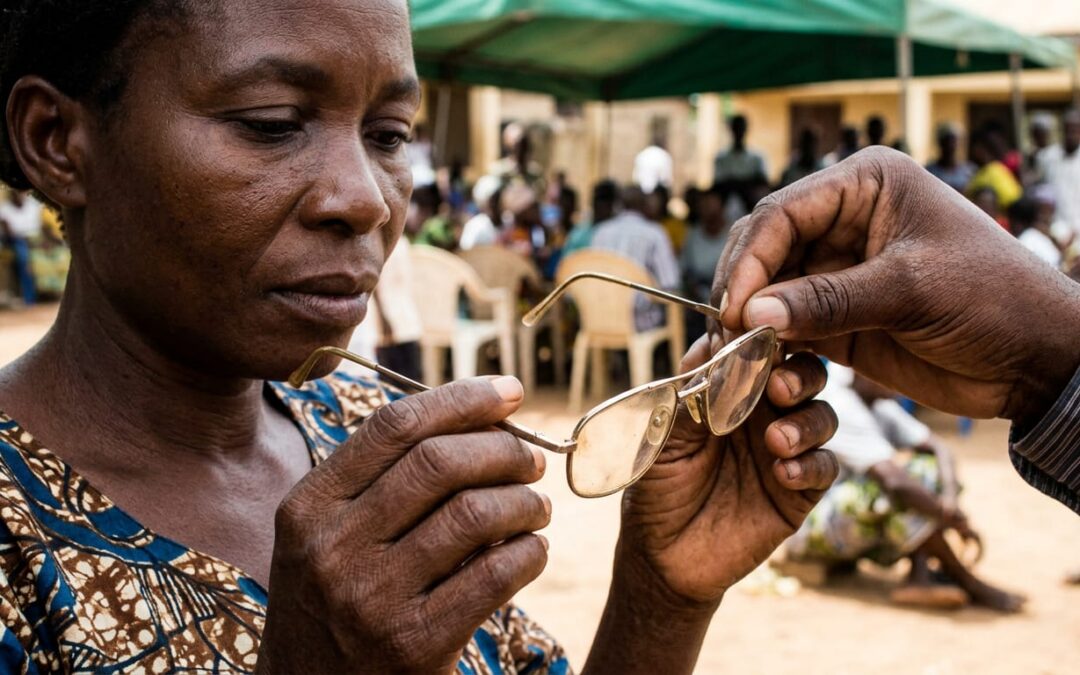
In Nigeria in 2025, seven widows received financial assistance to launch small businesses, creating pathways to long-term economic sustainability. That is not relief in the traditional sense – it is transformation. A one-week medical outreach clinic in Ghana provided medical and vision care to more than 2,100 people, with donated eyeglasses restoring vision for many patients. These are not abstract outcomes; they are documented results from trusted local partners executing funded projects.
Child welfare programs, including orphanages and toy drives, address a different but equally urgent dimension of humanitarian need. Through Project Dakota's Christmas Initiative, 23,136 children were reached globally across more than 13 countries and the United States in a single campaign – exceeding the original goal of serving 18,000 children. More than 5,000 of those children were in the United States alone.
Does Giving to a Humanitarian Charity Actually Give You Purpose?
Donors who give without any visibility into outcomes often describe a quiet frustration: they want to feel connected to what their generosity produced, but the connection never arrives. A check clears, a tax receipt appears, and that is the end of the story.
The most effective humanitarian organizations understand that giving purpose and meaning is not a side benefit of giving – it is what sustains long-term donors and, by extension, long-term impact. When donors can see the work, visit the projects, and follow documented progress, the relationship between giver and outcome becomes real.
Two real estate developers in Denver described this experience after joining a donor trip to Guadalajara: "One of the things we love about Impact Others is that you get to participate firsthand. You can be as involved as you want, but the great thing is you actually get to see the incredible work being done around the world. For us, it was a natural fit to become an Impact Others partner." That firsthand engagement is not available from every organization. It is a deliberate structural choice – one that reflects a conviction that donors deserve to witness what their generosity builds.
Impact Others Inc. funds clean water, food, orphanages, education, and new business opportunities through trusted local partners, so donors find real purpose in their giving.
What Should You Look for Before Choosing an Effective Humanitarian Charity?
Before committing your generosity to any organization, the decision comes down to whether the structure of the charity matches the values you bring to your giving. Low overhead is necessary but not sufficient. A direct funding model matters, but only if the local partners receiving those funds are genuinely accountable. And accountability on paper is different from accountability you can see with your own eyes.
The charities that earn sustained donor trust tend to share a common posture: they do not ask you to take their word for it. They invite you in. They welcome questions about overhead. They document project progress. When donors want to know my donation is making a difference, they provide a path to see it directly – not just a letter saying it happened.
If you are ready to give with that level of confidence, the Donate page is the natural next step.
Checklist
- Verify the overhead ratio before giving: ask what percentage of project-related donations reaches the project directly, not just what the charity's total overhead percentage is.
- Look for a local-partner model: the most effective humanitarian charities work through trusted partners embedded in the communities they serve, not distant headquarters managing field operations remotely.
- Ask whether donor site visits are available: an organization that welcomes you to see the work firsthand is making a stronger accountability commitment than one that relies solely on newsletters or social media.
- Match your giving to documented need: effective humanitarian giving connects your donation to a specific program area – clean water, food, orphanages, education, or business development – so you can follow real outcomes.
- Evaluate program breadth and long-term vision: the most impactful organizations address immediate survival needs and long-term development, because relief without opportunity leaves communities dependent.
- Start with one cause you care about: if you are new to international humanitarian giving, choosing one program area that resonates – water, food, child welfare, or economic opportunity – gives your first gift focus and makes the impact easier to follow.
FAQ
What percentage of my donation should actually reach the project in an effective charity?
There is no universal standard, but the most effective humanitarian organizations keep administrative expenses very low compared to most nonprofits, with project-related donations going directly to the project rather than being absorbed by overhead. When evaluating a charity, ask specifically about project-related donation routing, not just the overall expense ratio.
Which humanitarian program areas have the most direct impact – water, food, or education?
All three address critical needs, but the most effective organizations recognize that they are interconnected. Clean water supports health and school attendance. Food security supports cognitive development and economic participation. Education builds the foundation for long-term independence. The most impactful charities fund across multiple program areas rather than treating them as competing priorities.
Who actually manages the projects when I donate to a humanitarian charity?
In the most effective funding models, trusted local partners manage project execution on the ground. They understand the community, navigate local logistics, and maintain relationships that outside organizations cannot replicate. The funding organization raises and stewards the money, maintains independent bookkeeping, and communicates project progress – while the local partner handles implementation.
How do I know a humanitarian charity is being honest about where my money goes?
The most reliable indicator is whether the organization offers donor site visits to project locations. A charity willing to let you see the work firsthand is operating with a level of transparency that written updates alone cannot match. Independent bookkeeping, board-level financial oversight, and documented project progress from local partners are additional markers of genuine accountability.
Where are the most effective humanitarian projects happening right now?
Active humanitarian projects span multiple continents. In West Africa, medical outreach clinics in Ghana have served thousands of patients in a single week. In Nigeria, economic development programs have helped widows launch independent businesses. In Latin America, programs in Honduras, Colombia, and Mexico address food security and child welfare. In Asia, South Asia, and the Middle East – including India, Thailand, and Egypt – local partners are executing projects in education and community development.
What is the difference between a humanitarian charity and a relief organization?
Relief organizations typically respond to acute crises – natural disasters, conflict, famine – with immediate aid. Humanitarian charities often operate across both immediate relief and long-term development, funding programs like clean water infrastructure, orphanages, education, and business opportunities that address root causes rather than only symptoms. The most effective organizations do both, because crisis response without development investment leaves communities vulnerable to the next emergency.
Which charities are worth trusting with a recurring monthly donation?
Organizations worth trusting with recurring giving maintain independent bookkeeping, report monthly financials to their board, work through vetted local partners, and offer donors meaningful visibility into outcomes – including the option to visit project locations. Low administrative overhead and a direct funding model are the structural signals that a charity is built for long-term stewardship rather than short-term fundraising.
Choosing where to give is one of the most meaningful decisions a donor makes. If you want to support humanitarian work where project-related donations go directly to the project, where trusted local partners manage execution, and where you can see the impact with your own eyes, reach out to Impact Others Inc. directly. You can call 2196780669, email info@impactothers.com, or write to 5885 Cumming Hwy Ste 108347, Sugar Hill, GA 30518. The work is real. The need is urgent. And your generosity can go further than you think.